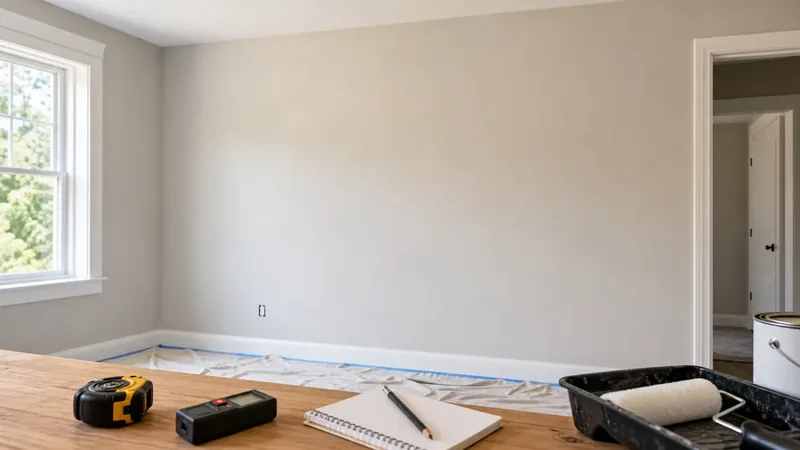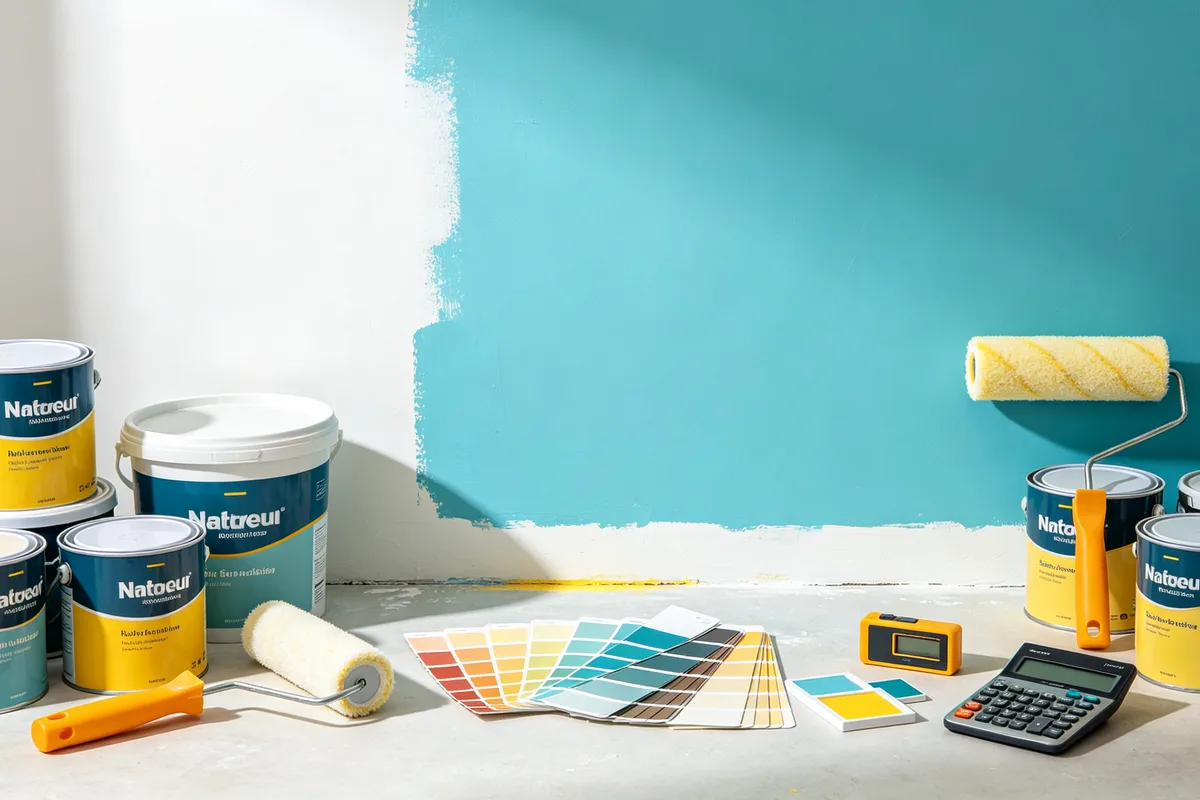

Buying interior paint should not start with a guess at the store shelf. A reliable paint quantity estimate starts with the wall area, the openings you will not paint, the number of coats, and the coverage printed on the paint label. This guide is the broad HomeCalcPro paint planning reference: use it when you want to understand the full method before entering numbers into the Paint Calculator. A typical bedroom may need two finish coats because fresh drywall, patched areas, or a darker color change often reduce real-world coverage. The goal is not to buy the absolute minimum. The goal is to buy enough paint from the same batch to finish the room, keep a little for touch-ups, and avoid paying for gallons that will sit in the garage for years.
Start with the Wall Area, Not the Floor Area
Paint is applied to vertical wall surfaces, so floor square footage is only a clue. A 12 ft by 12 ft room with 8 ft ceilings has 144 sq ft of floor area, but 384 sq ft of gross wall area before doors and windows. That difference is where many DIY estimates go wrong. The quickest method for a rectangular room is to calculate the perimeter, multiply by wall height, and then subtract large openings. If the room has an alcove, vaulted wall, stair opening, or one accent wall, measure those surfaces separately instead of forcing the whole room into one rectangle. Keep the estimate tied to a real purchase decision: the package size on the shelf, the coverage printed on the label, and the waste created by cuts, seams, edges, or uneven surfaces. A short note with room dimensions, units, product coverage, and waste allowance makes it easier to compare store quotes and catch a bad assumption before materials are ordered.
What to Measure Before You Calculate
Measure the finished surface the material will actually cover. Use one unit system, label each wall or floor section on a quick sketch, and keep product coverage beside the measurement notes. Write the measurements on a simple room sketch before calculating. Keep feet with square feet or meters with square meters, and do not mix inches into the formula unless you convert them first.
- Room length and width: Measure the finished wall-to-wall distance. For a rectangle, perimeter equals 2 x (length + width).
- Wall height: Measure from the top of the baseboard to the ceiling or to the planned paint line.
- Doors and windows: Subtract large unpainted openings. A standard interior door is often about 21 sq ft; a medium window is often 12-15 sq ft.
- Coverage per gallon: Many interior paints list about 350-400 sq ft per gallon per coat, but the label is the number that matters.
- Coats and allowance: Two coats are common for a clean finish. Add a modest waste allowance after multiplying by coats.
Paint Quantity Calculation Method
The cleanest calculation is: net wall area, multiplied by coats, divided by coverage per gallon. Only after that should you add a waste allowance and round up to real can sizes. The Paint Calculator follows the same planning logic and lets you change room size, openings, coverage, and coats without rebuilding the formula by hand. Keep the unit used for area or volume consistent with the manufacturer's coverage information. Carry the calculated quantity forward, apply the waste or contingency allowance, then round up to the package, roll, container, sheet, bundle, or delivery quantity that can actually be purchased.
Step 1: Gross Wall Area
Wall Area =
2 x (room length + room width) x wall height
For selected walls, measure each wall face and add the areas.
Step 2: Net Paintable Area
Paint Needed =
gross wall area - door area - window area
Do not subtract surfaces that will be painted with the same product.
Step 3: Paint Needed
Paint Needed =
net paintable area x coats / coverage per gallon
Use the product label, not a generic coverage promise, for final buying decisions.
Real Bedroom Paint Calculation
A homeowner is repainting a 12 ft by 14 ft bedroom with 8 ft walls. The room has one interior door at about 21 sq ft and two windows at 15 sq ft each. The chosen paint lists 350 sq ft per gallon and the room needs two coats because the old color is darker than the new one.
- Perimeter = 2 x (12 + 14) = 52 ft
- Gross wall area = 52 x 8 = 416 sq ft
- Openings = 21 + 15 + 15 = 51 sq ft
- Net paintable wall area = 416 - 51 = 365 sq ft
- Two-coat area = 365 x 2 = 730 sq ft
- Base paint needed = 730 / 350 = 2.09 gallons
- With 10% allowance = 2.30 gallons
- Practical purchase = 3 gallons, or one 2-gallon pail plus one gallon if available
Factors That Change the Final Quantity
The formula gives the baseline. These jobsite details decide whether that baseline is enough for the actual order:
- Fresh drywall: New drywall and joint compound can absorb paint unevenly. Primer is usually a separate purchase and should not be hidden inside the finish paint estimate.
- Color changes: A white wall going beige may cover easily. A navy wall going pale gray may need primer or an extra finish coat.
- Texture: Orange peel, knockdown texture, brick, and rough plaster hold more paint than smooth drywall.
- Application method: Sprayers can lose paint to overspray. Rollers leave paint in the cover and tray. Small losses are normal.
- Can sizes: A 2.09 gallon estimate still has to become a real purchase. Round up after coats and allowance, not before.
Practical Tips for Homeowners
These checks are small, but they are the kind that prevent an extra store run halfway through a Saturday project:
- Use one batch: For visible walls, buy enough finish paint at once so the color is consistent across the room.
- Keep a labeled reserve: Save a small amount with the room name, color code, sheen, and date for future touch-ups.
- Separate ceiling and trim: Ceiling paint, trim enamel, and wall paint usually have different coverage and should be calculated separately.
- Check the label: If the can says 325 sq ft per gallon, use 325. Do not rely on the most optimistic coverage number you see online.
- Use the room example carefully: The 12x14 example explains the method. For a specific 12x12 bedroom estimate, use the related room-size guide.
Common Estimating Mistakes to Avoid
The math is usually simple. The expensive mistakes come from weak measurements, optimistic coverage, and rounding too early:
- Using floor area: A 144 sq ft room can have 384 sq ft or more of wall area before deductions.
- Forgetting the second coat: Coverage per gallon is usually for one coat. Most walls need two.
- Subtracting too aggressively: Tiny openings rarely save enough paint to matter after cutting in and roller loss.
- Buying exact decimals: You cannot buy 2.09 gallons. Convert the estimate into available cans after adding allowance.
- Mixing unit systems: Square feet and gallons belong together for US estimates; square meters and liters should be calculated separately.
Turning the Estimate into a Material Order
Use our Paint Calculator to adjust the estimate for your room size, doors, windows, coats, and coverage rate. If you first need to check the wall area calculation, the wall area guide explains that step in more detail. For a specific bedroom-size paint quantity estimate, use the 12x12 room example as a quick reference before entering your own measurements. Compare the calculated requirement with the exact product specification, because nominal sizes and advertised coverage can differ from usable coverage. Round up to purchasable units and keep matching products, such as paint batches, wallpaper dye lots, flooring colors, or tile shades, in one order. For expensive, structural, hazardous, or unusually shaped projects, have a qualified supplier or contractor review the dimensions and assumptions before purchase.
Final Calculation Checklist
Before buying, confirm that the estimate answers the actual renovation question and includes every relevant surface or section.
- Measurements: All dimensions were checked twice and recorded with units.
- Project scope: Openings, closets, transitions, separate surfaces, and excluded areas were handled deliberately.
- Product data: Coverage, package size, pattern repeat, yield, or usable dimensions came from the selected product.
- Extra material: Waste or contingency reflects the layout, surface, installer experience, and repair needs.
- Final rounding: The result was rounded up to whole purchasable units after all adjustments.